Templates AI
(03)
Overview
Templates AI accelerates page publishing by combining reusable, on-brand templates with AI-generated content—mapping user inputs (text, tags, images) into structured layouts that work across languages and innosabi platforms.
Year
2025
For
innosabi


Project overview
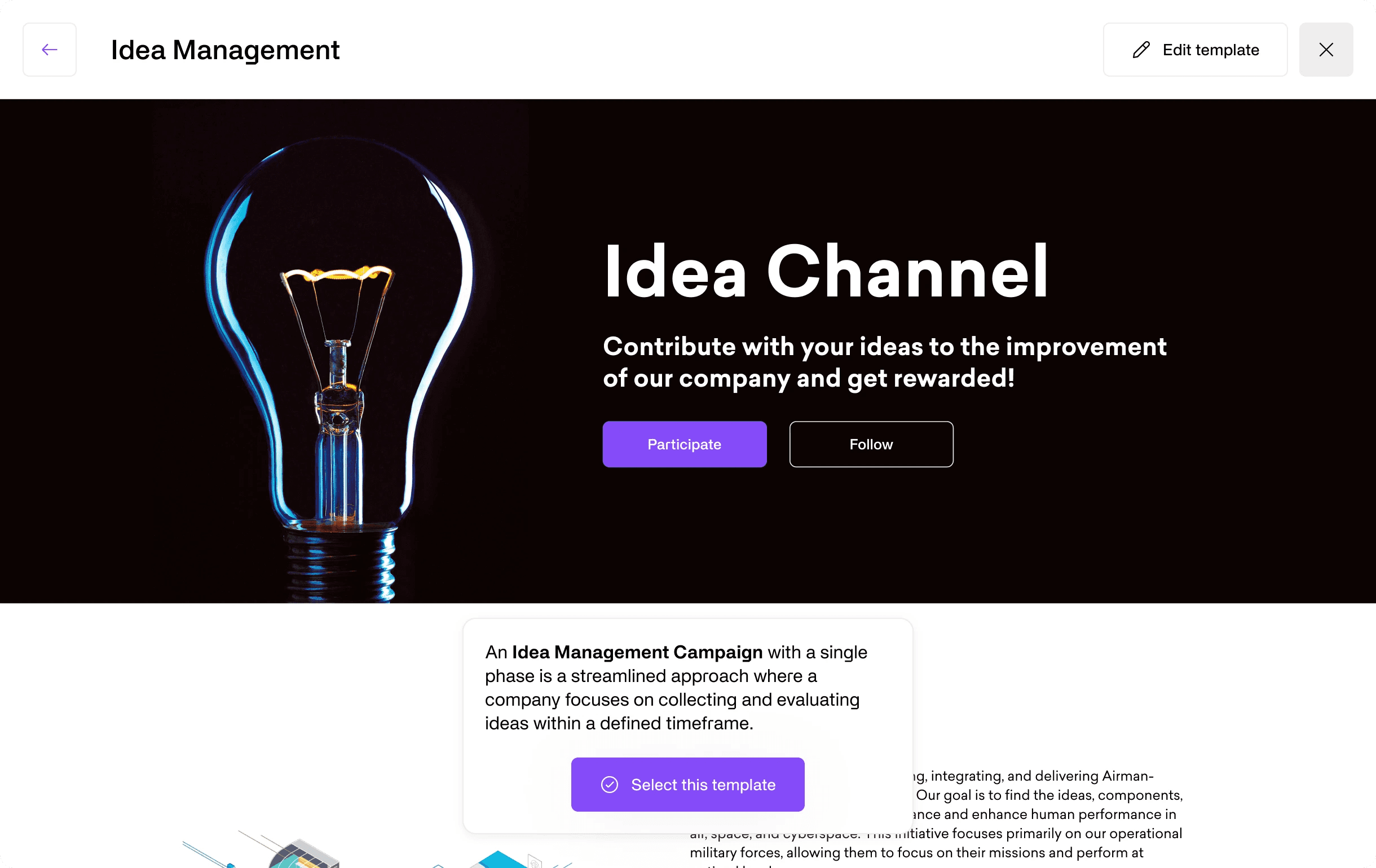
Templates AI extends the Toolbox Creation Assistant to make content creation faster and more consistent at scale. Instead of generating raw text and leaving users to build layouts manually, it injects AI-assisted content (copy, tags, visuals) into pre-built templates.
Users start with natural-language input in the Creation Assistant; Templates AI then maps that output into template slots (e.g., headline, intro text, hero image, meta fields) and produces a structured, ready-to-publish page—while supporting multi-language rollouts and customer-specific brand styling.

Key requirements:
• Reduce repetitive page building by combining AI-generated inputs with reusable layouts.
• Ensure templates fit each customer’s corporate identity while staying compatible with Toolbox’s modular design system.
• Support multiple AI models + translation tools, and integrate open image sources (e.g., Unsplash) instead of relying on AI image generation.
• Enable templates to work across multiple languages and deploy across innosabi platforms.
Design elements:
• Template selection UI with preview + customization options.
• Prompt strategy that generates copy aligned to each template’s structure and tone.
• Backend mapping logic that routes user/AI-generated data into specific template fields (headline, text blocks, visuals, meta).
Execution highlights:
• Researched best practices for template systems and structured content mapping in modern page builders.
• Ran cross-functional working sessions to define data structures and an API that supports both standard and customer-specific templates across different CI variants.
• Prototyped and iterated multiple versions; validated prompt outputs and template population logic using LangSmith workflows.
• Managed the delivery handoff across phases: concept + prototypes → design polish by a colleague → re-owned implementation and launch readiness with engineering and AI stakeholders.
What I learned:
• Platform flexibility needs intentional design: templates only scale when the API can handle both “standard” and “custom” without breaking.
• Human+AI works best as assisted structure, not full automation: users want speed, but also control.
• Prompt engineering is product quality: getting content to fit a fixed layout required rigorous testing and tuning.
My role:
I led Templates AI from concept through implementation: framing the vision, researching needs, designing the flow (wireframes/mockups/prototypes), validating early versions, and defining prompt strategies (LangSmith). After handing design finalization to a colleague, I returned to drive implementation and rollout—coordinating engineering, AI specialists, and internal stakeholders to ship a scalable template capability inside Toolbox.